




WORLD SERIES OF POKER® UNVEILS FULL WSOP PARADISE 2026 TOURNAMENT SCHEDULE AND EARLY-BIRD PACKAGE DETAILS
Historic $120 Million Total Prize Guarantee Highlighted by $50 Million Super Main Event at the Luxurious Baha Mar Hotel & Resort
LAS VEGAS (August 20, 2026) – The World Series of Poker (WSOP®) today unveiled the complete schedule for WSOP Paradise 2026, poker’s premier winter showcase live festival. Returning to the Bahamas at the prestigious Baha Mar Hotel & Resort, this year’s series will run from December 2 through December 17 and boasts an unprecedented $120 million in total guaranteed prize pools across 20 WSOP gold bracelet events.
Positioned at the end of the year, WSOP Paradise brings together the world’s elite poker players for a final tilt at WSOP glory in 2026. In addition to high-stakes action, the iconic annual WSOP Player of the Year (POY) race will be officially decided in Paradise, leaving everything to play for in the final stretch of the season. Beyond the competition, players can enjoy a world-class Caribbean vacation at the luxurious resort when taking time away from the felt.
Key highlights of the 20-event schedule include:
- Event #12 $25,000 WSOP Paradise Super Main Event: The flagship event of the festival, boasting a historic $50,000,000 prize guarantee
- Event #4: GGMillion$ No Limit Hold'em Championship: A $10,000 buy-in championship event featuring a massive $20,000,000 prize guarantee
- Event #1: Circuit Championship Mystery Bounty: Kicking off the festival with a $2,500 buy-in and a $5,000,000 prize guarantee
Full Tournament Schedule
|
Event |
Date |
Buy-In |
Guarantee |
|
#1 Circuit Championship Mystery Bounty NLH |
Dec. 2 |
$2.5K |
$5M |
|
#2 High Roller PLO/NLH Mixed |
Dec. 3 |
$25K |
$1M |
|
#3 High Roller NLH (Single Day) |
Dec. 4 |
$50K |
$2.5M |
|
#4 GGMillion$ NLH Championship |
Dec. 5 |
$10K |
$20M |
|
#5 Bahamas Big Bet Mix (Dealer’s Choice) |
Dec. 5 |
$5K |
$1M |
|
#6 WSOP Invitational |
Dec. 5 |
$250K |
$10M |
|
#7 High Roller PLO (Single Day) |
Dec. 6 |
$50K |
$2M |
|
#8 Baha-MONSTER STACK NLH |
Dec. 8 |
$5K |
$1M |
|
#9 Super High Roller PLO |
Dec. 8 |
$100K |
$5M |
|
#10 8-Game Mixed |
Dec. 9 |
$10K |
$1M |
|
#11 Super High Roller NLH |
Dec. 9 |
$100K |
$10M |
|
#12 Super Main Event |
Dec. 10 |
$25K |
$50M |
|
#13 9-Game Mixed Championship |
Dec. 10 |
$25K |
$2M |
|
#14 Double Board Bomb Pot PLO |
Dec. 12 |
$2.5K |
$1M |
|
#15 Caribbean COLOSSUS NLH |
Dec. 14 |
$10K |
$2M |
|
#16 Paradise PLOSSUS PLO |
Dec. 15 |
$10K |
$1M |
|
#17 High Roller Turbo NLH |
Dec. 15 |
$25K |
$2.5M |
|
#18 High Roller Turbo PLO |
Dec. 16 |
$25K |
$1M |
|
#19 The Closer [GGPoker Bounty Wheel] |
Dec. 16 |
$5K |
$1M |
|
#20 2026 Last Chance In Paradise NLH |
Dec. 17 |
$15K |
$1M |
Exclusive Early-Bird Packages
To celebrate the schedule release, WSOP has introduced two limited-time Early-Bird Packages for players securing their seats at Baha Mar. Deposits for both packages must be paid by October 31, and deposits are fully released once all tournament play requirements are met.
$100K PARADISE PACKAGE - “Play in Paradise, Live the Dream”
- Stay: 16-night stay from December 2 through December 18 in a Baha Mar Deluxe Room (resort fees included)
- Requirements: Minimum $100K in tournament buy-ins [must play both GGMillion$ Day 1A and Super Main Event Day 1A]
- Deposit: $5,000 deposit required by October 31
$300K VIP PACKAGE - “Play like a Pro, Enjoy like a VIP”
- Stay: 16-night stay from December 2 through December 18 in a Baha Mar Suite (resort fees included)
- Perks: VIP Fast Track Meet at Gate on arrival, round-trip SUV transfers, and complimentary buffet access
- Requirements: Minimum $300K in tournament buy-ins [must play both GGMillion$ Day 1A and Super Main Event Day 1A]
- Deposit: $10,000 deposit required by October 31
Players ready to book or seeking package details and eligibility can contact
“WSOP Paradise is the ultimate way to close out the poker calendar - combining world-class high-stakes competition with a luxury vacation experience at Baha Mar,” said Daniel Negreanu, GGPoker Global Ambassador. “With $120 million guaranteed across 20 bracelet events, the $50 million Super Main Event, and the WSOP Player of the Year race coming down to the wire, the stakes have never been higher. I can’t wait to head to the Bahamas and play for a bracelet in paradise.”
GGPoker is WSOP’s exclusive international partner, and GGPoker players can win their way to the WSOP Paradise 2026 Super Main Event via WSOP Express satellite tournaments, hosted at GGPoker year-round.
Poker fans around the world can follow the festival live, with action from WSOP Paradise streamed daily from December 5 at 3PM ET on the official WSOP YouTube channel.
Further details on event structures and schedules will be available on the WSOP Live app. The WSOP reserves the right to cancel, change, or modify the tournament or any tournament event, in part or in whole, without notice. Entry fees will be added to all events, and up to 5% of tournament buy-ins will be withheld for staff and operational costs. Guaranteed events are paid out after deducting the percentage for costs from the total prize pool.
Players should follow @WSOP on X (formerly Twitter) and Instagram or check WSOP.com for more news and updates on WSOP events: https://wsop.com/paradise. For more information on WSOP Express at GGPoker, please visit: https://ggpoker.com/tournaments/wsop-express/.
22-YEAR-OLD LUCAS JUMALON WINS THE 2026 WORLD SERIES OF POKER MAIN EVENT
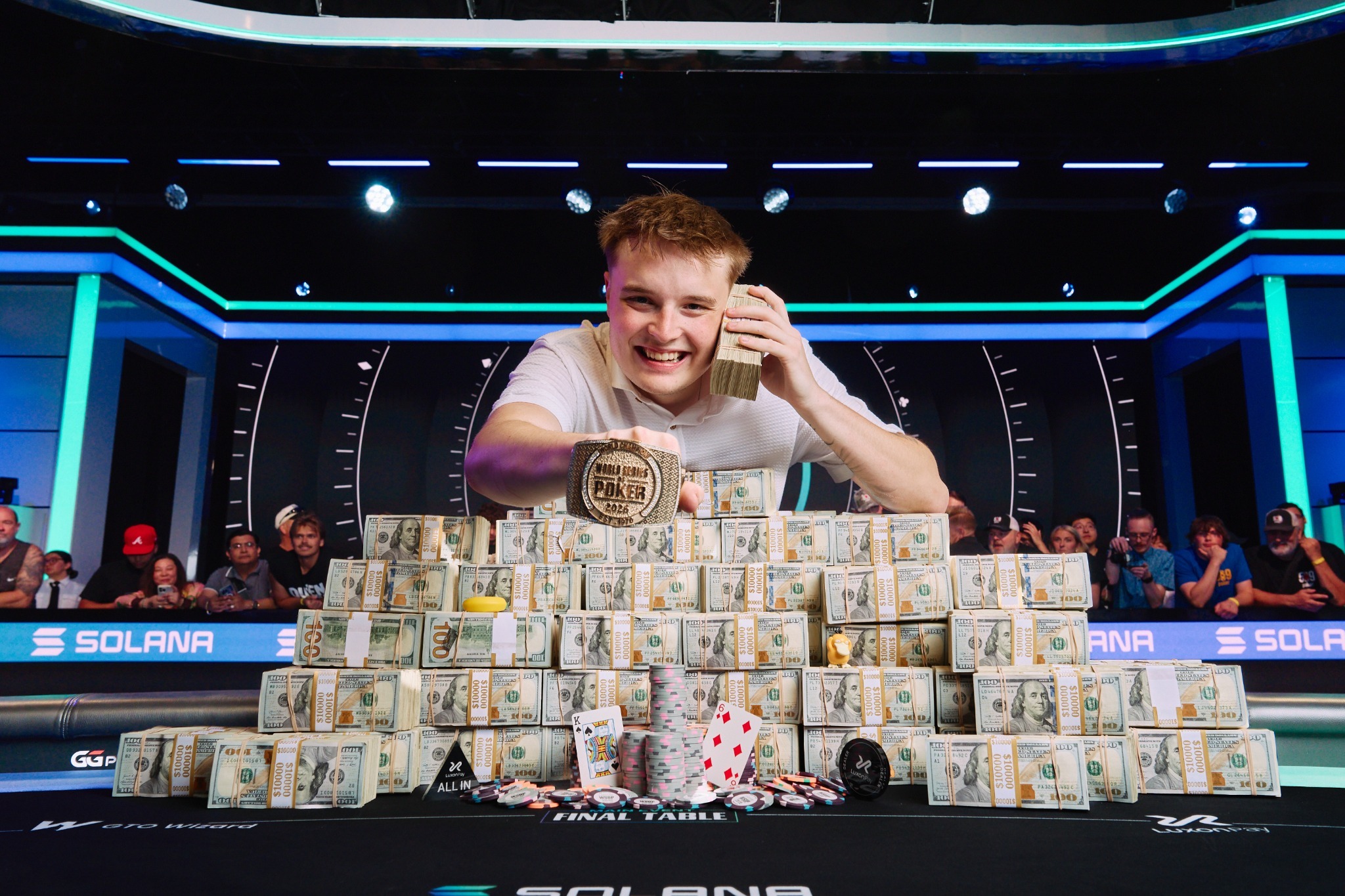
22-year-old Lucas Jumalon takes down the 2026 WSOP Main Event after defeating Lauri Saaskilahti heads-up to become one of the youngest champions in history
Las Vegas, Nevada (August 6, 2026) - Lucas Jumalon has officially etched his name into poker history, winning the 2026 World Series of Poker Main Event and claiming the coveted title of World Champion of Poker.
After an extraordinary run through one of the largest Main Event fields in WSOP history, the 22 year-old hailing from Spokane, Washington emerged victorious at Horseshoe and Paris Las Vegas, securing the $10,000,000 first-place prize and the most prestigious championship bracelet in tournament poker after defeating Finnish poker player Lauri Saaskilahti heads-up.
The victory capped an unforgettable journey through a massive field of 9,208 participants, with every player paying the $10,000 buy-in for a chance to compete for poker's ultimate prize in one of the largest WSOP Main Events in history.
Lucas Jumalon Completes WSOP Main Event Run
The road to the WSOP Main Event title was anything but easy. Thousands of players began the tournament with the same dream, but only nine survived to reach the final table.
By the time the final table began, Jumalon was not only among the last remaining players competing for the championship, but began the climax of the series with the chip lead. The final nine represented a diverse group of players from around the world, including experienced professionals, accomplished tournament regulars and emerging stars looking to make their mark on poker's biggest stage.
The final table featured Lucas Jumalon, Rami Hammoud, Jamie Shaevel, Greg Mueller, Michael Gagliano, Mario Boos, Lauri Saaskilahti, Han Feng and Evagoras Evagorou. Jumalon entered the final table as the overwhelming chip leader with 194 million chips.
With millions of dollars on the line and a WSOP Main Event bracelet within reach, the pressure only intensified as the field narrowed.
Ultimately, it was Jumalon who managed to navigate the final stages to secure the most coveted prize in poker.
A $10,000,000 Payday
Along with the title of 2026 WSOP Main Event champion, Jumalon walks away with a life-changing $10,000,000 payday.
The runner-up Saaskilahti receives $6,000,000, creating a dramatic $4 million difference between first and second place. The remainder of the final-table payouts were also substantial, with third place finisher Greg Mueller earning $3,750,000 and fourth place finisher Michael Gagliano taking home $2,750,000. Fifth place was worth $2,250,000 for Han Feng, while sixth through ninth (Rami Hammoud, Jamie Shaevel, Mario Boos, and Evagoras Evagorou) each earned at least $1,000,000.
The enormous first-place prize adds another chapter to the history of the WSOP Main Event. Winning poker's world championship requires players to survive more than a week of tournament action, avoid elimination against thousands of opponents, and perform under increasing pressure as the money and stakes climb.
For Jumalon, that challenge ultimately ended with the biggest victory of his career.
A WSOP Main Event to Remember
The 2026 WSOP Main Event proved once again why the tournament remains the centerpiece of the annual poker calendar.
With the WSOP Main Event’s return to ESPN and multitudes all over the world watching the action unfold, the scene was set for a memorable conclusion to the tournament.
“Youth is served at one of the most spirited final tables of all time,” said World Series of Poker Chief Executive Officer Ty Stewart. “The 2026 Main Event and its live television coverage reminded us why we love this game and the people who play it.”
The final table added another layer to the tournament's compelling story. Jumalon, at just 22 years old, serves as one of the youngest WSOP Main Event champions in history, only one year shy of record holder Joe Cada, who won the 2009 WSOP Main Event at just 21 years old.
The New World Champion
For Jumalon, the 2026 WSOP Main Event victory represents far more than a $10 million payday.
Winning the Main Event is the achievement that defines poker careers. The champion receives the coveted WSOP Main Event bracelet, a place in the game's history, and the distinction of becoming the newest World Champion of Poker.
The victory also places Jumalon among the elite group of players who have conquered the WSOP's signature event. Every year, thousands of players enter the Main Event hoping to experience the moment that Jumalon ultimately enjoyed: standing alone at the top of the poker world with the championship bracelet and $10 million prize secured, supported by his chanting group of friends and family.
After days of competition, countless hands and thousands of eliminations, the 2026 WSOP Main Event has its champion.
# # #
About World Series of Poker
The World Series of Poker® is the largest, richest and most prestigious gaming event and poker brand in the world, having awarded more than $4 billion in prize money over the past six decades. Featuring a comprehensive slate of tournaments in every major poker variation, the WSOP is poker’s longest-running tournament dating back to 1970. In 2025, the flagship event in Las Vegas attracted 246,960 entrants and awarded more than $481 million in prize money – both all-time records for the series. The WSOP portfolio of events includes approximately 50 WSOP Circuit Events annually across five continents, WSOP Europe (since 2007), WSOP Paradise (since 2023) and the record-breaking WSOP Online festival. International satellites to WSOP live events are hosted exclusively at GGPoker, the World’s Biggest Poker Room. For more information, please visit www.wsop.com.

Courtesy of Ante4autism.com
Hal Coblentz won the 18th Annual Ante4autism “Apollo Jett” Grand Champion crystal trophy this past Saturday! Presenting sponsor BIA, Final Table sponsor 3Z Brands and Double Diamond sponsor Furniture First celebrate event!
Hal Coblentz won the 18th Annual Ante4autism “Apollo Jett” Grand Champion crystal trophy this past Saturday! Presenting sponsor BIA, Final Table sponsor 3Z Brands and Double Diamond sponsor Furniture First celebrate event!
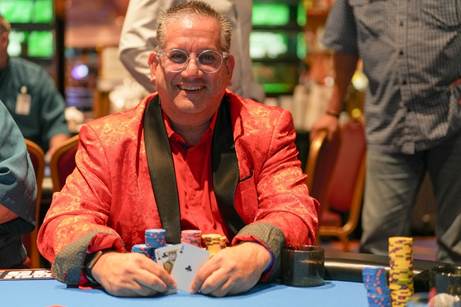
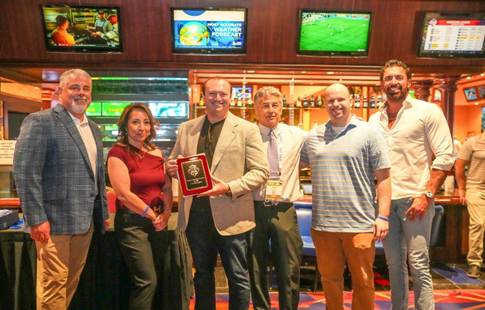

Las Vegas, July 28, 2026: Hal Coblentz, a local Las Vegas resident, won the 18th Annual Ante4autism “Apollo Jett” Grand Champion crystal trophy this past Saturday, 7/25 at the South Point Hotel & Casino. There were plenty of players and spectators from inside the home furnishings industry as well as celebrities, and local players. There were also many silent auction items bid on and won by attendees!!
The event raised $197,214, a new record!! Ante4autism Founder Doug Krinsky commented: “We would like to thank all the sponsors, players, spectators and the press for their tremendous support.” “It was a record setting night and we have all of you to thank for that.” He went on to say “Players were very generous Saturday night, as they added on to their stack of chips for only $100 for the 1st hour, and were able to rebuy for $100, if they busted out. They took full advantage, to help raise a record amount for the 5 Autism charities!”
2026 sponsor list:
$25,000 Presenting Sponsor (Sold out): Bedding Industries of America
$15,000 Final Table Sponsor (Sold out): 3Z Brands
$10,000 Diamond Sponsor (No limit): Furniture First National Buying Group, Furniture First golf event
$5,000 Platinum Sponsors (No limit): Carpenter, Karl & Cathi Glassman, Krinsky’s Taekwondo Academy, Serta Simmons Bedding, PFP – Planned Furniture Promotions, Bread Financial, Leggett & Platt, Ashley, Englander
$2,500 Gold Sponsors (No limit): Krinsky’s Taekwondo Academy, A Tini Bar, Precision Textiles, Pete & Jenny Primeau
$1,000 Silver Sponsors (No limit): Coconis Furniture, BoxDrop, Roger Magowitz, Janet Pickett, Joe Matejka Jr., Gary Fazio, Vara Home, International Hyperbarics Association, High Risk Pregnancy Center of Nevada, R & A Marketing, Boise Mattress, Sleepy Town Mattress, Joyce Cassen, Anonymous donations
$500 Bronze Sponsors (No limit): Mattress Depot, Gardner’s Mattress and More, Colonial, Customatic Sleep Technologies, John McPhaden
Special Donations: R & A Marketing, Leggett & Platt, Tempur-Pedic, Stearns & Foster, Nectar, A Tini Bar
The five Autism charities that will receive the proceeds from this year’s event are: AJ Foundation, Avenues of Autism, Bridgeway Academy, Feat of Southern Nevada, and the NAASEO – National Autism Association of SE Ohio. All the charities are listed on Ante4autism.com with a link to each charity to see the great work each charity does for the families.
Founder Krinsky would like to thank all the Co-Hosts, as they volunteer their time. Co-Hosts include: Joey Amato – Rock N Roll City Mattress, Myra Anneken – Mother of a child with Autism, Stuart Carlitz – Bedding Industries of America, Bo Coconis – Coconis Furniture, Randy Coconis – Coconis Furniture, Nick Hrkman – 3Z Brands, Karina Jett– Keller Williams VIP, Andrew Kauffman – Furniture First, Mack Kauffman – Furniture First, Mike McQuiston – Casper, Anthony Mehran – Huffman Koos Furniture, David Wachendorfer – Ashley, Jerry Williams – Retail Service Systems Inc.
THE 57th ANNUAL WORLD SERIES OF POKER® CONCLUDES AN EXTRAORDINARY SUMMER OF GLOBAL ENGAGEMENT AND ELITE COMPETITION
This summer’s event also saw huge growth in reach and engagement across WSOP’s social media channels, with over 378 million views
LAS VEGAS (July 17, 2026) – With 51 days of thrilling, high-stakes competition in the bag, the 57th annual World Series of Poker (WSOP®) at Paris Las Vegas and Horseshoe Las Vegas officially concluded its summer tournament schedule on July 15, 2026. Featuring a massive slate of 100 live gold bracelet events, this year's festival once again demonstrated the unparalleled scale, passion, and global community of live tournament poker.
“The 57th annual World Series of Poker proved that Las Vegas remains the undisputed epicenter of the poker universe,” said Ty Stewart, Chief Executive Officer of the WSOP. “The energy inside Horseshoe and Paris Las Vegas was nothing short of electric. What is truly remarkable this year is how our community expanded far beyond the physical walls of the casino floor. Through our newly redesigned final table arena, extensive linear broadcast schedule, and unprecedented digital engagement, we brought the drama, excitement, and glory of winning a WSOP gold bracelet to millions of new fans worldwide. We are incredibly proud of this summer's success and cannot wait to witness the Final Nine battle for the World Championship on ESPN next month.”
Redefining the Live Experience on Poker's Biggest Stage
Throughout the summer, the Las Vegas Strip was the focal point of the poker world as players from around the globe competed for poker's ultimate prize: a WSOP gold bracelet and a place in poker history.
Key milestones from the summer tournament action include:
- Colossal Main Event Field: The legendary $10,000 No-Limit Hold'em World Championship (the ‘Main Event’) attracted a massive field of 9,208 entrants, creating a colossal prize pool and proving the enduring allure of the world’s premier freezeout tournament
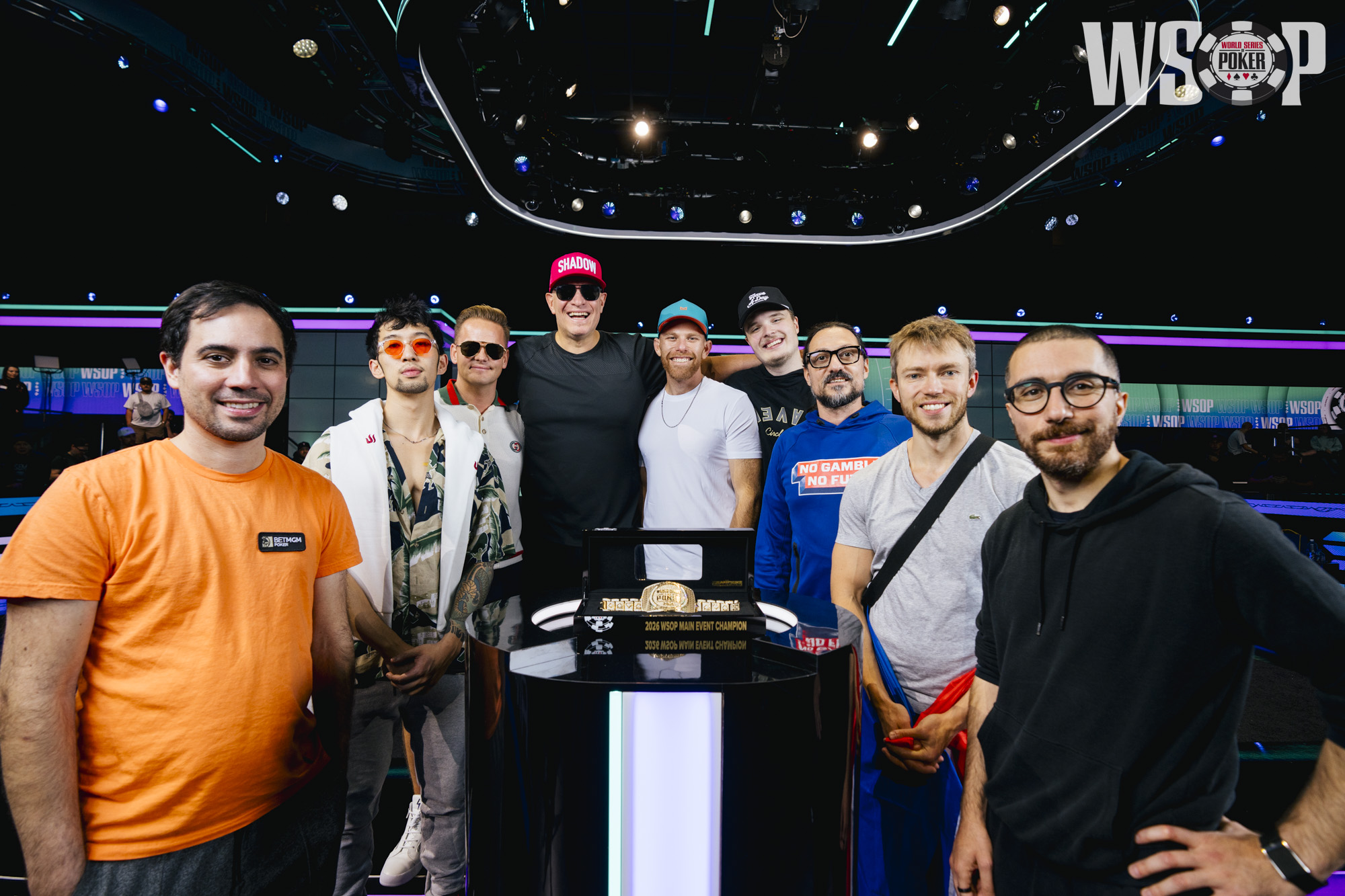
- The New Final Table Arena: WSOP officially unveiled a completely redesigned, state-of-the-art Final Table Arena and broadcast environment. The new stage integrates advanced lighting and large-scale digital displays to elevate the presentation of poker’s most prestigious final tables
- Historic Broadcast Expansion: Live coverage of the Main Event returned to ESPN alongside a new multi-year broadcast agreement with Warner Bros. Discovery to distribute coverage across HBO Max, Eurosport, and TNT Sports globally
- The "Final Nine": The final nine players survived a grueling field to punch their ticket to the historic Main Event Final Table. They will return to Las Vegas from August 3 to 5, 2026, to play down to a champion live on ESPN
- Summer of Superstars: This year’s event saw an unprecedented number of bracelets won by poker luminaries with impressive records in the game’s history books; Daniel Negreanu won his eight WSOP bracelet by taking down Event #76 $100,000 High Roller Pot-Limit Omaha for over $2.2M, while reigning WSOP Main Event champion Michael ‘The Grinder’ Mizrachi further burnished his reputation by winning Event #70 $10,000 Pot-Limit Omaha Championship, claiming his ninth WSOP bracelet and a $1.35M prize. The poker world’s undisputed power couple Kristen and Alex Foxen also made history by each claiming a WSOP bracelet in 2026, taking down Event #19 $25,000 High Roller No-Limit Hold’em and Event #44 $10,000 Super Turbo Bounty No-Limit Hold’em, respectively
- Seamless Player Experience: The WSOP Live mobile app continued to enhance the playing experience, streamlining registration, virtually eliminating cage lines, and providing real-time seat alerts to thousands of players throughout the summer
WSOP 2026 By The Numbers
- 251,899 entries – a new record for the total number of entries in a single WSOP series
- $469,975,059 – total 2026 WSOP gold events prize amount
- 35,157 places paid
- 22,811 entries to Event #63 $1,000 Mystery Millions No-Limit Hold’em – the biggest field in the 2026 series, the largest Mystery Millions event, and the largest $1,000 event in live tournament poker history
- 1,368 entries to Event #68 $1,000 Ladies No-Limit Hold’em Championship – the largest Ladies event in live tournament poker history
- 11,933 entries to Event #18 $1,500 Monster Stack No-Limit Hold’em – the largest Monster Stack event in live tournament poker history
- 4,764 entries to Event #87 $1,000 Mystery Bounty Pot-Limit Omaha – the largest Pot-Limit Omaha event in live tournament poker history
- 12,560 entries to Event #72 $1,000 Mini Main Event – the largest Mini Main event in live tournament poker history
- 41 – The number of $1M+ prizes won across the 2026 series
- 57 events exceeded $2+ million prize pools - equalling last year’s record
- 8 events exceeded $10+ million prize pools
- 149 - number of countries represented in the WSOP 2026 playing field
- Top Ten Countries by WSOP 2026 participants: 1 – United States, 2 – Canada, 3 – France, 4 – Great Britain, 5 – Japan, 6 – China, 7 – Israel, 8 – Germany, 9 – Brazil, 10 – Mexico
- 111 – number of countries represented in the WSOP Main Event 2026 playing field, a new record
- Oldest Player – Merle Vangieson, born June 28, 1931
- Youngest Player – Easton Jorgensen, born July 13, 2005
Worldwide Broadcasts Drive Growth Of Game
With thrilling WSOP action broadcast exclusively on ESPN Networks, Eurosport, TNT Sports, Abema Japan, Groupe M6 in France, and other media partners, poker fans had more opportunities than ever to follow their heroes, new and old, at the felt in 2026.
Comprehensive linear and digital coverage, available in more than 300 million homes across 70+ countries, ensured that countless big moments - from calculated bluffs to cunning value bets - were analyzed and enjoyed by enthusiasts on every continent.
Edited WSOP broadcasts will air from July 21, allowing a worldwide audience to catch up on all the summer’s action.
Explosive Digital Reach: WSOP's Social Media Footprint
A highlight of the 57th annual WSOP was its unprecedented digital growth. While fans packed the physical tournament rooms, millions more watched the action unfold online. Across all major platforms, WSOP social media channels generated an astronomical 378.3 million total views during the 100-bracelet series, adding 222,828 total new followers across its digital ecosystem.
WSOP 2026 Social Media Performance
|
Platform |
Total Views/Impressions |
New Audience Growth |
|
YouTube |
38.7 million views |
103,128 new subscribers |
|
|
125 million views |
54,450 new followers |
|
|
127 million views |
56,800 new followers |
|
X |
36.6 million impressions |
8,450 new followers |
Looking Ahead: A True Global Season
While the Main Event action in Las Vegas has paused until the Final Table resumes in August, the WSOP excitement continues year-round. This year marks the formal rollout of the ambitious, revamped $1 Million Global Player of the Year (POY) race. The new global leaderboard unifies the brand's three flagship festival pillars: WSOP Europe (which completed its historic run in Prague earlier this spring), the Las Vegas summer series, and the upcoming WSOP Paradise winter festival.
The global POY winner will be crowned at the conclusion of WSOP Paradise, hosted at Baha Mar resort in The Bahamas from December 1 to 17, 2026. In the meantime, the WSOP Circuit (WSOP-C) continues its action-packed year, including a special concurrent Circuit run in Las Vegas from July 14 to 25, 2026.
Players should follow @WSOP on X (formerly Twitter) and Instagram or check WSOP.com for more news and updates on WSOP events.
____________________________________________________________________________________________________________
THE 2026 WORLD SERIES OF POKER® MAIN EVENT REACHES IT’S FINAL TABLE; NINE CONTENDERS REMAIN IN PURSUIT OF TITLE AND $10M PRIZE
Following a grueling eight days of play, the massive 2026 tournament goes on a brief hiatus before a three-day televised battle begins August 3 to crown poker’s newest world champion
LAS VEGAS (July 14, 2026) – After a summer of record-breaking turnout and intense competition at Horseshoe and Paris Las Vegas, the 2026 World Series of Poker (WSOP®) $10,000 No-Limit Hold'em World Championship - better known as the Main Event - has officially reached its Final Table. Out of a colossal field of 9,208 hopefuls, only nine elite players remain, each guaranteed a prize of at least $1,000,000.
These nine survivors will now go on a brief hiatus before returning to the felt on August 3 for a three-day battle to crown the undisputed World Champion of Poker, who will walk away with the sport’s biggest and most prestigious title, the iconic Main Event gold bracelet, and a staggering $10,000,000 first-place prize.
The road to the 2026 Final Table was one of the most grueling tests of endurance in poker history. To get to this moment, these nine individuals had to battle through marathon sessions, overcoming the mental and physical fatigue of elite tournament poker to outlast thousands of the world's best professionals and passionate amateurs alike.
The following nine players have punched their ticket to the 2026 WSOP Main Event Final Table:
- Lucas Jumalon – United States – 194,000,000 Chips
- Rami Hammoud – Canada – 79,000,000 Chips
- Jamie Shaevel – United States – 56,000,000 Chips
- Greg Mueller – Canada – 48,500,000 Chips
- Michael Gagliano – United States – 46,500,000 Chips
- Mario Boos – France – 44,000,000 Chips
- Lauri Saaskilahti – Finland – 37,500,000 Chips
- Han Feng – United States – 25,000,000 Chips
- Evagoras Evagorou – Cyprus – 22,500,000 Chips
"The 2026 World Series of Poker Main Event will go down as one of the most memorable of all time," said Ty Stewart, Chief Executive Officer of WSOP. "We now have a final table worthy of the biggest stage in poker. With the world watching, we can't wait to welcome them back August 3 and watch history unfold live."
When the Final Table resumes on August 3, play is scheduled over three days until an outright champion is crowned. Fans around the globe can watch the action unfold live across multiple broadcast partners.
Global Final Table Broadcast Details
In the United States and over 70 countries worldwide, ESPN Networks will carry the exclusive live coverage:
- August 3: 9:00 PM – Midnight (ET) on ESPN2
- August 4: 9:00 PM – Midnight (ET) on ESPN
- August 5: 10:30 PM – 1:30 AM (ET) on ESPN
Edited programs of the WSOP Main Event final table will premiere on ESPN Networks August 10:
- August 10: 9:00 PM – 11:00 PM (ET) on ESPN2
For viewers in the UK and 60+ countries across Europe and Asia, Eurosport and TNT Sports will provide comprehensive coverage of the final table action:
- August 4:
- 1:00 AM - 4:00 AM (GMT) on Eurosport 1, Eurosport Asia, TNT Sports 2
- 11:00 PM - 1:00 AM (GMT) Rebroadcast Final Table Part 1 on Eurosport 1, Eurosport Asia, TNT Sports 2
- August 5:
- 1:00 AM - 4:00 AM (GMT) on Eurosport 1, Eurosport Asia, TNT Sports 2
- 11:00 PM - 1:00 AM (GMT) Rebroadcast Final Table Part 2 on Eurosport 1, Eurosport Asia, TNT Sports 2
- August 6:
- 2:30 AM - 5:30 AM (GMT) on Eurosport 1, Eurosport Asia, TNT Sports 1
- 3:00 PM - 5:00 PM (GMT) Rebroadcast Final Table Part 3 on Eurosport Asia
- 9:00 PM - 11:00 PM (GMT) Rebroadcast Final Table Part 3 on Eurosport 1
- 11:00 PM - 1:00 AM (GMT) Rebroadcast Final Table Part 3 on TNT Sports 2
Edited programs of the WSOP Main Event final table will premiere in Europe and Asia on August 14 on Eurosport 1, Eurosport Asia and TNT Sports 4 at 10:00 PM (GMT).
(Note: Live Main Event streams will also be available on WSOP’s YouTube in limited international markets where ESPN and Eurosport are not available).
Players should follow @WSOP on X (formerly Twitter) and Instagram or check WSOP.com for more news and updates on this year’s WSOP event.
# # #
About World Series of Poker
The World Series of Poker® is the largest, richest and most prestigious gaming event and poker brand in the world, having awarded more than $4 billion in prize money over the past six decades. Featuring a comprehensive slate of tournaments in every major poker variation, the WSOP is poker’s longest-running tournament dating back to 1970. In 2025, the flagship event in Las Vegas attracted 246,960 entrants and awarded more than $481 million in prize money – both all-time records for the series. The WSOP portfolio of events includes approximately 50 WSOP Circuit Events annually across five continents, WSOP Europe (since 2007), WSOP Paradise (since 2023) and the record-breaking WSOP Online festival. International satellites to WSOP live events are hosted exclusively at GGPoker, the World’s Biggest Poker Room. For more information, please visit www.wsop.com.
Texas Holdem Radio
Poker Strategy Session #6
By: Hal Coblentz- Semi-Professional Cash Game Player 20+ years
Mastering Continuation Betting (C-Bets)
One of the most powerful weapons in modern poker strategy is the continuation bet, commonly called a C-Bet.
If you raised before the flop and then bet again on the flop, you are making a continuation bet — continuing the story that you have the strongest hand.
Learning when to C-Bet, how much to bet, and when to give up separates average players from consistently winning players.
What Is a Continuation Bet?
A continuation bet occurs when:
- You raise pre-flop
- One or more players call
- You bet again on the flop
The logic is simple:
You represented strength pre-flop.
The flop bet reinforces that story.
Most of the time your opponents miss the flop, meaning they fold a large percentage of hands.
Why C-Bets Work
Even strong starting hands only hit the flop about 1/3 of the time.
Example:
You raise with:
AK
Flop comes:
9♦ 4♣ 2♠
You likely missed — but so did your opponent.
Because you showed strength pre-flop, your opponent often assumes you have:
AA
KK
AK
AQ
or an overpair.
That pressure forces folds.
Good Boards to C-Bet
Certain flops strongly favor the pre-flop raiser.
Examples:
Dry Boards
A♣ 7♦ 2♠
K♦ 8♣ 3♥
These boards are hard for callers to connect with.
These are excellent spots to C-Bet nearly every time.
Dangerous Boards to Be Careful
Some flops hit the caller's range better.
Examples:
9♠ 8♠ 7♦
J♥ T♥ 9♣
These boards are:
- connected
• draw heavy
• dangerous for bluffs
In these situations, consider:
- checking
• pot controlling
• choosing smaller bets
Optimal C-Bet Sizing
A common mistake is betting too large.
Typical strong C-Bet sizes:
1/3 pot
or
1/2 pot
Smaller bets accomplish the same goal:
They apply pressure while risking fewer chips.
Remember:
Poker is about risk vs reward.
When to Give Up
Even the best players don't fire multiple barrels blindly.
Warning signs:
- multiple callers
• coordinated boards
• aggressive opponents
Sometimes the best play is simply:
Check and move on.
Saving chips is just as important as winning pots.
Quick Strategy Tips
✔ C-Bet more when heads-up
✔ C-Bet more on dry boards
✔ Use smaller bet sizes
✔ Avoid bluffing into multiple players
✔ Pay attention to opponent tendencies
Pro Insight
The best players are not just betting randomly.
They are constantly asking:
“Does this board favor my range or my opponent's range?”
Once you start thinking in terms of ranges instead of cards, your strategy will level up quickly.
Coming Next Session
Strategy Session #7
Playing Pocket Pairs Like a Pro
- When to set mine
• When to fold small pairs
• How to extract maximum value
Session #5 – 2026
By: Hal Coblentz- Semi-Professional Cash Game Player 20+ years
In Session #4 was about continuation betting, Session 5 is where we separate the button-clickers from the thinkers.
This week I’m focusing on Turn & River decision-making — where most money is actually won (or punted).
A lot of players play the flop fine… and then completely lose the plot when the board changes or pressure ramps up. Let’s fix that.
Big Idea for Session 5
👉 Every turn and river decision must answer ONE question:
Am I betting for value, protection, or as a bluff — and what worse hands continue?
If you can’t answer that instantly, checking is often the better play.
1. Turn Play: The Truth Card
The turn is where ranges start to narrow and mistakes get expensive.
When to Fire the Turn
I double-barrel the turn when:
- The turn improves my perceived range (overcards, scare cards, range cards)
- I have equity + fold equity
- I’m still getting value from worse hands
Example – Cash Game
- You raise CO with A♠ K♠
- BB calls
- Flop: K♦ 7♣ 2♠ → you c-bet, BB calls
- Turn: Q♠
This is a beautiful turn.
- You pick up nut-flush equity
- You block strong Kx
- Worse hands (KJ, KT, 7x, flush draws) still continue
Bet again.
When to Slow Down
I check turns when:
- The turn smashes villain’s range
- I’m against sticky calling stations
- My hand has showdown value but hates a raise
Remember: checking doesn’t mean weakness — it often means control.
2. River Play: Value > Ego
Rivers are where players either print… or light money on fire.
Value Betting the River
Ask yourself:
- What worse hands realistically call?
- How thin is too thin against this opponent?
Example – Tournament Spot
- You raise with Q♠ Q♦
- Board runs: Q♣ 9♠ 6♠ 4♥ 2♦
You have top set.
If your opponent can call with:
- Overpairs? No.
- Two pair? Rare.
- Missed draws? No.
This is a small value bet or a check, not an ego shove.
Great players don’t size for how strong they feel — they size for how weak the caller is.
3. Bluffing Rivers (The Adult Version)
River bluffs should be:
- Credible
- Blocker-based
- Opponent-specific
I bluff rivers when:
- I block the nuts
- The story makes sense from preflop → river
- My opponent can actually fold
If you’re bluffing a calling station, that’s not strategy — that’s charity.
4. Bet Sizing: Stop Using One Size
Turn & river sizing matters more than flop sizing.
My Simple Framework
- Small bets (25–40%) → thin value, cheap bluffs
- Medium bets (50–70%) → strong value, pressure
- Big bets / overbets → polarized (nuts or air)
If you’re betting big without polarization, you’re begging to get paid wrong or snapped off.
Week 5 Homework
Before you click “bet” on the turn or river, force yourself to say:
- What am I representing?
- What hands call?
- What hands fold?
- Am I happy if I get raised?
If you don’t like the answers — check.
Final Thought
Flops are flashy.
Turns build pots.
Rivers decide winners.
Master turn and river play, and your win-rate jumps immediately — in cash games, tournaments, and especially live poker where players hate folding late.
Next week, I’ll dive into Week 6: Board Texture & Range Advantage — how to know who the board actually favors before you put a chip in the pot.
See you at the tables,
Hal ♠️
🎙️ Weekly Poker Strategy Coaching
Session #1 – 2026
Play Fewer Hands. Play Them Better
By: Hal Coblentz- Semi-Professional Cash Game Player 20+ years
Welcome to Session #1 of 2026 and the launch of my Weekly Poker Strategy Coaching Series here on Texas Hold’em Radio.
Each week, I’ll be sharing practical poker strategy—real-world concepts you can actually apply at the table. This isn’t about fancy solver talk or overcomplicating the game. It’s about thinking clearly, playing disciplined poker, and making better decisions consistently.
If you follow this series week after week, you’ll tighten up your fundamentals, eliminate common leaks, and start approaching the game with more confidence and purpose.
And we’re starting with the most important concept in poker—the one I see players ignore every single day.
🃏 Session #1 Strategy Session
Play Fewer Hands — Play Them Better
The biggest mistake I see from losing and breakeven players isn’t what they do after the flop.
It’s the hands they choose to play in the first place.. (I experienced this tonight as a matter of fact at Hustler Casino, Los Angeles )
Poker is not a game of constant action. It’s a game of patience, selection, and timing. Every hand you enter is an investment, and too many players invest in hands that simply don’t make money over time.
If you want to improve quickly, start here.
🔑 Position Is Everything
One of the first things I learned—and one of the last things many players truly respect—is position.
Your seat at the table should dictate how many hands you play.
Early Position (UTG / UTG+1)
When I’m first to act, I play tight and disciplined.
Hands I’m comfortable opening:
- AA–TT
- AK, AQ
- Occasionally AJs or KQs, depending on the table
If I’m unsure, I fold. Early position mistakes are costly and put you in tough spots for the rest of the hand.
Middle Position
From middle position, I can widen slightly—but control still matters.
Hands I’ll consider:
- 99–77
- AJ, ATs
- KQs, QJs
- Select suited connectors like 98s
I still avoid weak offsuit hands and “hope poker.”
Late Position (Button & Cutoff)
This is where I make a lot of my money.
Late position gives me:
- More information
- More stealing opportunities
- More control over pot size
Hands that are folds up front become profitable here because position gives you leverage.
🛑 I Don’t Limp
This is one habit I eliminated years ago—and my results improved immediately. Poker Pro Susie Asaacs who I met early in my poker life said something to me that always stuck. "If you can't raise, fold" is what she said. It really stuck with me and to this day if a hand isn’t good enough for me to raise, it usually isn’t good enough to play.
Limping:
- Invites multi-way pots
- Eliminates fold equity
- Forces you into guessing games post-flop
I raise with a plan—or I fold.
🧠 I Think in Ranges, Not Just Cards
I don’t ask myself:
“Do I have the best hand?”
I ask:
“How does my hand perform against my opponent’s range?”
Once you start thinking this way, poker becomes clearer and less emotional. You stop chasing hands and start making profitable decisions.
🃏 Hand Examples – How I Play These Spots
Cash Game Example #1 ($2/$3 NLH)
Position: UTG
Hand: K♠ J♦
My Play: ➜ Fold
Even though the hand looks decent, it’s dominated too often and puts me in bad spots out of position. This is an easy fold for me every time.
Cash Game Example #2 (Late Position)
Position: Button
Hand: A♣ 9♣
Action: Folds to me
My Play: ➜ Raise 2.5–3x
Now the same concept changes completely. I have position, fold equity, and strong draw potential. This is a profitable open for me.
Tournament Example #1 (Early Levels)
Blinds: 100 / 200
Stack: 40 BB
Position: UTG+1
Hand: 6♠ 6♦
My Play: ➜ Small raise or fold depending on the table
Early in tournaments, I don’t force action. Small pairs play best heads-up, and I’m focused on stack preservation—not gambling.
Tournament Example #2 (Mid Stages)
Blinds: 1,000 / 2,000
Stack: 22 BB
Position: Cutoff
Hand: Q♠ J♠
My Play: ➜ Open raise
This is a spot where pressure matters. I still have fold equity, position, and a hand that plays well post-flop. These are the spots where tournaments are actually won.
📊 Your Homework This Week
This strategy works whether you are playing live or online like many of our listeners. :
- Pay attention to how many hands you play
- Note your position when you enter pots
- Be honest about hands you knew you shouldn’t have played
Awareness alone will improve your game.
🎯 Final Thought
Poker rewards patience, discipline, and clarity.
I don’t win by playing more hands.
I win by playing better hands, in better spots, for better reasons.
Next week, I’ll break down Continuation Betting—when I fire, when I slow down, and when I shut it down completely.